 The Starset Society
by: Ambur Masen
While nuclear power plants provide a significant amount of much-needed electricity, they
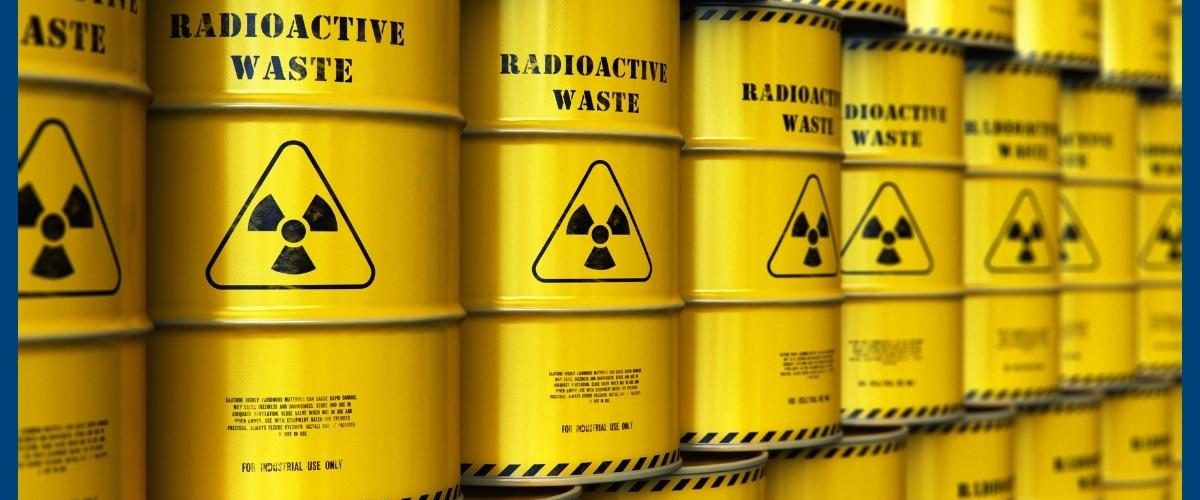
also produce hazardous waste that needs to be dealt with. The waste that is of particular
concern is the radioactive waste produced at certain points in the nuclear power cycle, like
uranium tailings from mining or spent fuel rods from nuclear reactors. Radioactive waste
differs from other types of hazardous industrial waste, like the greenhouse gases emitted
by power plants that run on fossil fuels, because of the ionizing radiation the waste emits. If
not contained properly, this type of radiation can pose significant risks to human health
and the environment. Government policy dictates what radioactive materials are
considered ‘waste’, and how they’re to be disposed of; as a result, all nuclear power plants
are required to follow strict regulatory standards.
Some countries, like France and Japan, have developed ways to recycle or reuse the
radioactive waste from nuclear power plants and thus reduce the amount of waste that is
stored in the environment; others, like the United States, have yet to implement such
strategies and rely on specific direct storage methods for minimizing the amount of
radiation emitted by the waste. However, that may change soon enough: two US-based
companies, Oklo and Curio, have both recently announced new radioactive waste recycling
projects that may come to fruition by the early 2030s.
A Brief Introduction to Radioactivity and Radiation
Radioactivity is a property of certain unstable atoms that spontaneously break apart into
more stable forms, releasing energy and atomic particles in the process. This property is
also referred to as ‘radioactive decay’, and the resulting energy is called ‘radiation’.
Sometimes, radioactive atoms will simply lose a few particles and become a different form
(or isotope) of the same element; other times, the radioactive atoms (or radioisotopes) will
split into different, lighter elements, some of which will continue to be radioactive until
they, too, decay into a stable form.
The good news is, all radioactive materials become less radioactive with time, including the
waste resulting from nuclear power plants. The rate at which this occurs is measured
through a radioisotope’s unique half-life, or the time it takes for 50% of the radioactive
atoms in a particular sample to lose 50% of its radioactivity. Half-lives can range from a few
seconds to a few billion years. This concept plays a key role in how radioactive waste from
nuclear power plants is managed.
It’s also important to note that nuclear power plants are far from the only source of
radioactive waste; a wide range of industries from medicine to agriculture to
manufacturing employ radioactive materials and thus end up with radioactive waste to
deal with.
Radioactive Waste and Nuclear Power Plants
The radioactive waste produced by nuclear power plants refers to any material that is
either naturally radioactive (like the uranium or plutonium found in used fuel rods) or has
been contaminated by radioactive materials (like rags or tools used by workers). Some
factors that are considered when categorizing the waste include the radioactive material’s
half-life, as well as what kind of ionizing radiation is emitted during decay.
There are a few different types of ionizing radiation, including alpha particles, beta
particles, and gamma rays. Each type comes with its own risks. Alpha particles, for
example, are blocked by skin—but are incredibly harmful if ingested. On the other hand,
gamma rays are incredibly penetrating and require very special handling.
Because nuclear power plants only require a small amount of fuel relative to amount of
electricity generated, they also produce a small amount of toxic waste, especially when
compared to other electricity-generating methods. According to The World Nuclear
Association, “On average, the waste from a reactor supplying a person’s electricity needs for a year would be about the size of a brick. Only 5 grams of this is high-level waste – about the
same weight as a sheet of paper. The generation of electricity from a typical 1,000-megawatt nuclear power station, which would supply the needs of more than a million people, produces only three cubic metres of vitrified high-level waste per year, if the used fuel is recycled.
In comparison, a 1,000-megawatt coal-fired power station produces approximately 300,000
tonnes of ash and more than 6 million tonnes of carbon dioxide, every year.”
Three Categories of Nuclear Waste and How They’re Handled
Ultimately, nuclear waste is categorized into three groups, based on their relative level of
radioactivity and risk of harm: low-level waste (LLW), intermediate-level waste (ILW), and
high-level waste (HLW). Depending on the waste in question, it will either be stored or
disposed of. Some HLW can be recycled after it is stored for a period of time.
Low-Level Waste (LLW)
Around 90% of radioactive waste produced by nuclear power plants is in the form of
LLW—but this high volume of waste only contributes about 1% of the total radioactivity
produced by nuclear waste. This type of waste is typically only mildly radioactive and
usually has a shorter half-life. LLW doesn’t require special handling like shielding and can
be directly disposed of in near-surface repositories, which prevent the waste from coming
in contact with the environment as it undergoes radioactive decay. Usually, LLW can be
compacted or incinerated before disposal to further decrease its volume.
Intermediate-Level Waste (ILW)
ILW encompasses materials that fall above the radioactivity threshold to be considered
LLW but are still considerably less dangerous to handle than HLW. Examples include resins, chemical sludges, and materials from decommissioned, or retired, nuclear reactors.
Usually, ILW requires some shielding during transport because of its higher level of
radioactivity. This type of waste is usually sealed in cement or other impermeable material
before being disposed of and encompasses about 7% of the volume of nuclear waste, but
only 4% of the radioactivity. Sometimes, ILW must be temporarily stored for a period of
time before it is disposed of—that way, it can undergo radioactive decay and become less
radioactive before it’s sent for disposal.
High-Level Waste (HLW)
Only a miniscule amount of nuclear waste is considered HLW, or highly dangerous waste.
HLW typically refers to used, or spent, fuel rods, which contain radioactive elements like
uranium and plutonium. This can also refer to the waste products that are separated from
usable fuel during recycling endeavors. Because nuclear power only requires a small
amount of fuel relative to the amount of power it generates, it also results in a very small
amount of HLW, or about 3% by volume. However, this tiny amount of HLW contributes
upwards of 95% of the radioactivity of nuclear waste and can generate a lot of heat.
Because of this, HLW is often stored for at least 40-50 years before it is disposed of—that
way, it can cool off and lose much of its radioactivity (~99%) before it’s sent to a final
storage facility, making its handling much safer.
HLW waste is usually stored on-site at nuclear power plants in a cooling pond where the
water can both cool the waste and shield against its radiation. Then, once it’s safer to
handle, the HLW can be disposed of—or recycled into new fuel.
Nuclear Waste Recycling Concepts from Around the World
Of the miniscule amount of HLW produced by nuclear power plants, nearly 97% of it can be
recycled into new fuel. That is because the spent fuel rods still contain a tremendous
amount of usable fuel – namely, uranium and plutonium — both of which can be used by
conventional reactors in reprocessed fuel rods. As such, a lot of recycling programs in
countries like France, Japan, and Russia, involve separating out these elements from the
rest of the waste materials and mixing them with fresh uranium in new fuel rods, called
MOX fuel, or ‘mixed-oxide fuel’. The remaining HLW is then vitrified, or mixed with glass,
for safe disposal. The resulting waste typically has a much shorter half-life and takes up
much less space.
Spent fuel rods contain a wide variety of radioactive materials, and separating out the
usable ones can be very complex. Currently, there are three main types of recycling
methods: pyrometallurgy (which uses heat), electrometallurgy (which uses electricity), and
hydrometallurgy (which uses aqueous solutions). The most common method, ‘PUREX’, is a
hydrometallurgical process that involves dissolving the spent fuel in nitric acid in order to
separate out the usable metals.
As for the United States, Oklo and Curio each have different recycling concepts that they
plan to introduce within the next few years. First, Oklo announced plans to build a new
nuclear recycling facility in Tennessee. They plan to recover recyclable materials from
spent fuel rods and create new rods using modern electrochemical processes, rather than
PUREX. They may partner with the Tennessee Valley Authority to recycle their used fuel
rods, which would be the first time an American utility explored such recycling methods.
Curio, on the other hand, is developing new methods for recycling spent fuel that has built-
in safeguards against proliferation. Their methods have been shown to be very efficient,
with over 99% of usable fuel being extracted from the spent rods. They aim to perform a
demonstration of this ‘Nucycle’ technology by Q4 2027.
You can read more about these new projects here.