 The Starset Society
By: Estefania Gatton
New Horizons
Inside the small, armored compartment of the mining spaceship The Argonaut, a faint, static hiss of the long-wave stellar radio provided a monotonous background to the steady rhythm of the guidance systems. The vessel was positioned deep within Saturn’s A-Ring, harvesting material crucial for the inner solar system’s colonization efforts. Outside, the fragmented expanse turned in slow, perpetual motion, illuminated by the distant, pale sun.
Valentina glanced at the environmental display. The ship’s internal CO2-purifier was cycling normally. She watched the efficiency gauge climb, marveling at the bacteria that powered the system. I can’t believe we found this golden-egg bacterium on Mars, she thought. They were just existing, performing basic metabolic functions in the permafrost. I will always wonder how they might have evolved if we never arrived. The initial bioethical furor over leveraging a potentially native organism had long since faded into acceptance, but the question remained.
“I still can’t believe we’re here,” said Lewis, his hand tracing a line on the navigation screen. “My grandmother used to talk about the stage of civilization we live in. She’d call it the ‘Stellar Infancy’, the moment humanity finally started treating the Solar System as a neighborhood, not just a distant view. She was always putting very specific names to things.”
“We’re certainly beyond our ‘Planetary Adolescence,’ Lewis,” Valentina replied. “We’re in a new age now. We harvest, we build, we sustain.”
Lewis returned to his theme. “She had this book. A classic of old fiction—Tuf’s Voyaging, I think it was called. It was about a trader who became master of a massive, ancient ‘seedship’ used for ecological engineering. At the time it was written, in the 20th century, it was the definition of impossible. It also had a strange focus on cats… science and cats… things that she loved; no wonder why it was her favorite book.”
“And now we’re stuck trying to get the basics right,” Valentina sighed. Paraterraforming faced persistent setbacks. “I heard those reports about structural fatigue in the Europa deep domes… It sounds like the project might be impossible after all. Too much thermal stress, too many subsurface quakes, too many…”
“I know, but you can’t say it’s impossible” Lewis interrupted. “Challenges have never been apart from human history, but success neither. I bet people thought the same thing about Mars a hundred years ago. Two centuries ago, human civilization was confined to mining and harvesting resources from Earth, and now look where we are!”
He paused, looking out at the glittering ring. “If I was living at that time, I would probably have been driving one of those ‘old’ Ferrari cars. Yet here I am, driving a spaceship near Saturn. I am grateful for existing now and here, and I am grateful for everything and everyone that has happened and existed before me to make this possible.”
Valentina felt a subtle shift. “True. They didn’t stop until they made it possible. We’ve got an atmosphere we can breathe up there now… But they could never make it possible with Venus,” she said, with a note of weariness returning in her voice.
“That is another story!” Lewis replied, the conversation abruptly halted by a sharp tone slicing through the pilot’s compartment calm.
“Acquisition alert. Non-ice composite signature, three kilometers out,” Lewis called, philosophical contemplation was replaced by focus. The Argonaut’s spectral analysis had detected a concentration of valuable hydrocarbons and silicates.
Valentina glanced at the profit margin data. “Confirming high value! That’s our bonus, Lewis. The bonus is still the best motivator, isn’t it? It’s not good or bad, it just is—the way the system works.”
“The way the system works,” Lewis agreed, initiating the maneuvering sequence.
“Engaging thrusters to match velocity. Prepare the magnetic claws. We need to catch this one before the gravity gradients pull it out of the habitable mining vector.”
Lewis gripped the controls, his profound gratitude for the past now was being fuel with his precision in the present.
“Capture claws engaged for retrieval.” Lewis confirmed, his eyes locked on the target. “Let’s bring home our piece of the future.”
From Fiction to Feasibility
Since humanity first looked up at the stars, the idea of turning an alien world into a second Earth has captivated our imagination. It’s a concept deeply present in science fiction, the notion of taking a dead, desert planet and transforming it into a vibrant, living ecosystem. This is the goal of terraforming, a concept introduced by Jack Williamson in 1942 (1): the deliberate, long-term process of modifying the atmosphere, temperature, and ecology of a celestial body to make it habitable for terrestrial life. While the concept was once confined to novels, today it is a rigorous field of scientific inquiry. Researchers are now actively studying radical engineering solutions to achieve this goal. Far from being a mere fantasy, the study of terraforming forces us to confront the limits of our technology, the tenacity of life itself, and the profound responsibilities that come with becoming planetary architects.
Case Studies in Planetary Engineering
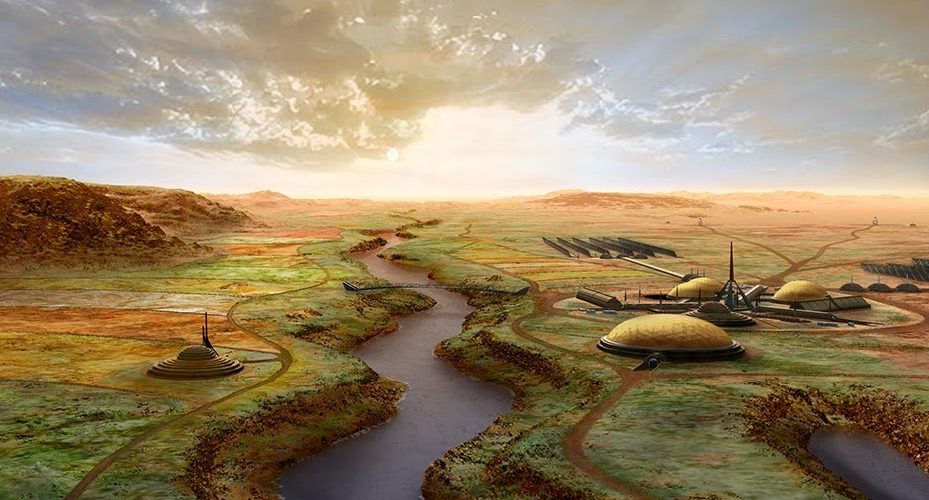
The ambition of terraforming requires tackling an array of fundamental physical obstacles across the solar system, demanding highly customized solutions. For worlds afflicted by a global hypothermic state and low atmospheric pressure, such as Mars (2), the challenge is an energy-management problem requiring extraordinary measures, such as nanoparticle seeding to catalyze global warming (3), because local CO2 resources are insufficient to meet atmospheric density goals (26). Conversely, planets suffering from a runaway greenhouse effect and crushing pressures, such as Venus (4), require a truly radical approach focused on atmospheric removal or mitigation. For the outer solar system’s icy moons, the approach shifts entirely: instead of transforming the entire world, the proposed strategy is paraterraforming (5), the construction of protective, self-contained domes or underground habitats that create “islands of life” to shield colonists from radiation, offering a more immediate, localized path to colonization.
The First Steps: Building the Interplanetary Supply Chain
The reality of planetary colonization demands a pragmatic approach long before global terraforming begins. Success relies on In-Situ Resource Utilization (ISRU) (6), the practice of living off the land, to transform remote settlement into sustainable habitats by leveraging the unique resources of the solar system to create a self-sufficient economic sphere. Fuel is a critical first goal. For instance, missions could target Titan’s frigid lakes of methane (7) for use as rocket propellant (8), effectively establishing a cosmic gas station. Water and Life Support can be sourced from the extensive ice on Europa (9) or the material from Saturn’s rings (10, 11), which could be used as a primary source of water, shielding material, and producing breathable oxygen and hydrogen through electrolysis (27). On the Moon, automated systems would begin mining the regolith to extract Helium-3 (a potential fuel for future fusion reactors) (12, 13) and acquire metals from near-Earth asteroids (14, 15) to provide the raw materials needed for deep-space construction and manufacturing.
The Role of Biology: Synthetic Extremophiles
Planetary engineering is fundamentally a biological project. Technologies can warm a planet and thicken its atmosphere, but only life can create a stable, breathable, oxygen-rich environment (16). This monumental task will fall to pioneer organisms, microbes and primitive plant life engineered to survive the most hostile conditions. This is where the emerging field of Synthetic Biology becomes essential. Researchers aim to design lifeforms with specific, adapted traits (17). On a planet like Mars, this would involve creating extremophile bacteria or genetically modified lichens engineered to perform several functions simultaneously. For example, radiation-resistant organisms that possess high defenses against intense cosmic and solar radiation, a capability Earth life largely lost since our magnetic field evolved, though some terrestrial extremophiles retain these traits (18). Furthermore, for atmospheric conversion, these organisms must efficiently convert the CO2-rich atmosphere into breathable oxygen (19). Finally, for regolith stabilization, they need to chemically process the sterile planetary soil into fertile soil capable of supporting higher-order plant life (20). By focusing on these smallest, most resilient lifeforms, scientists plan to initiate biogenesis on a planetary scale, beginning the process of converting a geologically dead world into a living, functioning biosphere.
The Reality of the Transition: Controlled Environments
The ambitious goal of planetary transformation often overshadows a simple truth: even in the best-case scenario, global terraforming will take a long time. This means that for the first colonists, survival will focus on living in closed-loop environments under intensely controlled conditions (21), establishing the foundation for durable, self-sustaining habitats. This transitional period requires revolutionary approaches to off-world architecture. As explored in studies like Designing sustainable built environments for Mars habitation (22), new structures must integrate full-cycle systems for atmospheric recycling, water recovery, and food production while also Lewisimizing crew psychological well-being. Key infrastructure efforts rely heavily on In-Situ Resource Utilization (ISRU), making use of local materials to minimize cost and dependence on Earth. For instance, protecting habitats from intense space radiation is a primary concern. The article Sustainable colonization of Mars using shape optimized structures (23) explores using Martian regolith (soil) as a primary construction material. By creating thick shielding layers or utilizing subterranean layouts, engineers can build robust, protected living spaces. This focus on locally sourced materials, coupled with innovative architectural designs, is the only viable pathway to transitioning from an expensive outpost into a truly independent, permanent colony.
Conclusion
Ultimately, the goal of terraforming demands an astonishing leap in human effort, presenting challenges that are currently beyond our technological and logistical capabilities. The absolute scale of energy and material required, whether to mitigate a runaway greenhouse or overcome a global hypothermic state, is immense, representing a centuries-long challenge in both timescale and technological capability. Going beyond the technical hurdles, we must confront the ethical challenge of Planetary Protection: is it a moral obligation to preserve the pristine state of other worlds, especially those like the icy moons that may harbor native microbial life? (24, 25). However, the true importance of terraforming research isn’t measured only by its eventual success on another planet. It pushes the boundaries of atmospheric science, biological engineering, and sustainable living. By attempting to create a new world, we gain invaluable knowledge on how to be better, more responsible understandings of our original, living planet, the one world that already truly is home.
Literature cited
1. Jack Williamson, 1942. ‘Collision Orbit’, in the publication: Astounding Science-Fiction, July issue. https://archive.org/details/sim_astounding-science-fiction_1942-07_29_5
2. Bruce M. Jakosky, 2024. Mars’ atmosphere, volatiles, and climate as the sun heats up over the next 6 billion years, Icarus, Volume 410, 115888, ISSN 0019-1035, https://doi.org/10.1016/j.icarus.2023.115888.
3. Samaneh Ansari et al., 2024. Feasibility of keeping Mars warm with nanoparticles.Sci. Adv.10,eadn46500. DOI:10.1126/sciadv.adn4650
4. Carl Sagan, 1961. The Planet Venus.Science133,849-858. DOI:10.1126/science.133.3456.849
5. Matthew S. Williams, 2019. Making a Greenhouse on Another World: Where Can We Paraterraform in Our Solar System? In https://interestingengineering.com/science/making-a-greenhouse-on-another-world-where-can-we-paraterraform-in-our-solar-system
6. NASA, 2024. In-Situ Resource Utilization (ISRU). In https://www.nasa.gov/mission/in-situ-resource-utilization-isru/
7. McKay C. P. 2016. Titan as the Abode of Life. Life (Basel, Switzerland), 6(1), 8. https://doi.org/10.3390/life6010008
8. NASA, 2013. Methane-Powered Vehicles In https://spinoff.nasa.gov/node/9296
9. Richard J. Cartwright et al., 2025. JWST Reveals Spectral Tracers of Recent Surface Modification on Europa. Planet. Sci. J. 6 125. DOI 10.3847/PSJ/adcab9
10. Miller, K.E., Filacchione, G., Cuzzi, J.N. et al. 2024. The Composition of Saturn’s Rings. Space Sci Rev 220, 70. https://doi.org/10.1007/s11214-024-01104-y
11. J. H. Waite, Jr. et al. , 2018. Chemical interactions between Saturn’s atmosphere and its rings. Science362,eaat2382. DOI:10.1126/science.aat2382
12. Greg De Temmerman, 2021. The helium bubble: Prospects for 3He-fuelled nuclear fusion, Joule, Volume 5, Issue 6, Pages 1312-1315, ISSN 2542-4351, https://doi.org/10.1016/j.joule.2021.05.003.
13. Florian Vidal, 2022. Helium‑3 from the lunar surface for nuclear fusion?. In https://www.polytechnique-insights.com/en/braincamps/space/extraterrestrial-mining/helium-3-from-the-lunar-surface-for-nuclear-fusion/
14. Fleming, M., Lange, I., Shojaeinia, S., & Stuermer, M. 2023. Mining in space could spur sustainable growth. Proceedings of the National Academy of Sciences of the United States of America, 120(43), e2221345120. https://doi.org/10.1073/pnas.2221345120
15. Sven Modell, 2025. Space mining as an emerging organisational field: An institutional logics perspective, Space Policy, 101712, ISSN 0265-9646, https://doi.org/10.1016/j.spacepol.2025.101712.
16. Lyons, T. W., Diamond, C. W., Planavsky, N. J., Reinhard, C. T., & Li, C. 2021. Oxygenation, Life, and the Planetary System during Earth’s Middle History: An Overview. Astrobiology, 21(8), 906–923. https://doi.org/10.1089/ast.2020.2418
17. Conde-Pueyo, N., Vidiella, B., Sardanyés, J., Berdugo, M., Maestre, F. T., De Lorenzo, V., & Solé, R. 2020. Synthetic Biology for Terraformation Lessons from Mars, Earth, and the Microbiome. Life (Basel, Switzerland), 10(2), 14. https://doi.org/10.3390/life10020014
18. Krisko, A., & Radman, M. 2013. Biology of extreme radiation resistance: the way of Deinococcus radiodurans. Cold Spring Harbor perspectives in biology, 5(7), a012765. https://doi.org/10.1101/cshperspect.a012765
19. Ashour, M., Mansour, A. T., Alkhamis, Y. A., & Elshobary, M. 2024. Usage of Chlorella and diverse microalgae for CO2 capture – towards a bioenergy revolution. Frontiers in bioengineering and biotechnology, 12, 1387519. https://doi.org/10.3389/fbioe.2024.1387519
20. Timofeeva, A. M., Galyamova, M. R., & Sedykh, S. E. 2023. Plant Growth-Promoting Soil Bacteria: Nitrogen Fixation, Phosphate Solubilization, Siderophore Production, and Other Biological Activities. Plants (Basel, Switzerland), 12(24), 4074. https://doi.org/10.3390/plants12244074
21. Florian Neukart, 2024. Towards sustainable horizons: A comprehensive blueprint for Mars colonization, Heliyon, Volume 10, Issue 4, e26180, ISSN 2405-8440, https://doi.org/10.1016/j.heliyon.2024.e26180.
22. Hongli Sun, Mengfan Duan, Yifan Wu, Yunyi Zeng, Hengxin Zhao, Shuangdui Wu, Borong Lin, Ronggui Yang, Gang Tan, 2024. Designing sustainable built environments for Mars habitation: Integrating innovations in architecture, systems, and human well-being, Nexus, Volume 1, Issue 3, 100030, ISSN 2950-1601, https://doi.org/10.1016/j.ynexs.2024.100030.
23. Soureshjani, O.K., Massumi, A. & Nouri, G. 2023. Sustainable colonization of Mars using shape optimized structures and in situ concrete. Sci Rep 13, 15747. https://doi.org/10.1038/s41598-023-42971-9
24. Jack Knudson, 2025. Constantly Changing Ice on Jupiter’s Moon Europa Hints at Possible Ocean and Life. In https://www.discovermagazine.com/constantly-changing-ice-on-jupiters-moon-europa-hints-at-possible-ocean-and-47633
25. Nikk Ogasa, 2024. Our picture of habitability on Europa, a top contender for hosting life, is changing. In https://www.sciencenews.org/article/vision-europa-habitability-jupiter-moon
26. Jakosky, B.M., Edwards, C.S. Inventory of CO2 available for terraforming Mars. Nat Astron 2, 634–639 (2018). https://doi.org/10.1038/s41550-018-0529-627. Mostafa El-Shafie, 2023. Hydrogen production by water electrolysis technologies: A review, Results in Engineering, Volume 20, 101426, ISSN 2590-1230, https://doi.org/10.1016/j.rineng.2023.101426.