 The Starset Society
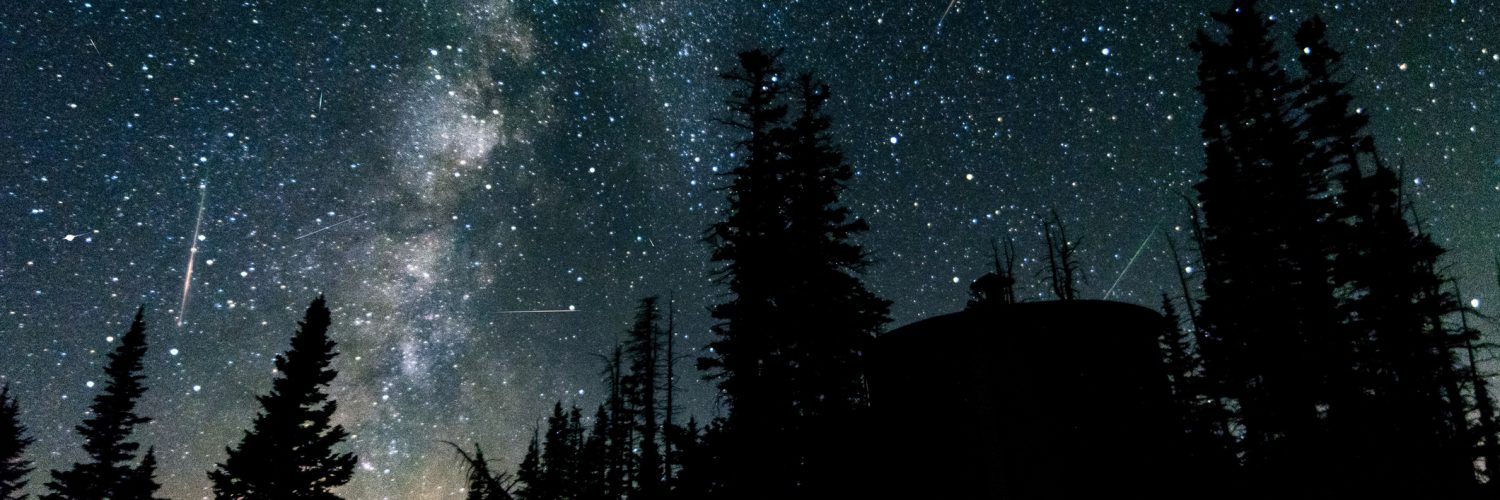
This year, the Perseid meteor shower will be active from mid-July to mid-August, reaching its peak on 12 August.
Read on for tips on how to catch the best view of this stunning shower from planetary scientist and meteorite expert Dr Ashley King.
Meteors are often called shooting stars, though the bright streaks you see in the sky don’t have anything to do with stars.
In fact, what you’re wishing on are tiny particles of dust – leftovers from the birth of our solar system – vaporising in Earth’s atmosphere.
Tips for watching the Perseid meteor shower
Some of the more spectacular of these meteors can sometimes be visible from city centres, including in London, however you’re bound to get the best experience away from the light pollution in urban areas.
“The darker the skies, the better your chances of seeing the really faint meteors as well,” says Ashley. “You could go to the coast or stand on a hill in the middle of the countryside somewhere.”
A full Moon can really light up the sky too, so you’ll likely have more success spotting meteors when a shower’s peak coincides with a new Moon. Fortunately, in 2025, several showers are set to occur when the skies are at their darkest.
You also need to be patient.
“You might not be able to see anything for the first 10 minutes while your eyes adjust to the dark,” he adds.
“Once you get used to the low light levels you’ll begin to notice more and more. So don’t give up too quickly.”
What causes a meteor shower?
Meteor showers occur when Earth passes through streams of tiny pieces of debris – meteoroids – left behind by comets and asteroids. The peak of a meteor shower is when we see the highest rate of meteors. This happens as we pass through the densest part of the debris stream.
Most comets are composed of dust and ice, which Ashley likens to “a big, dirty snowball”.
“As comets orbit the Sun, the ice sublimes [changes from a solid to a gas] and the trapped dust is swept out into a tail behind them.”
Nearly all meteors are tiny dust particles, about the size of a grain of sand travelling at tens of kilometres per second through space.
“As they come out of the vacuum of space and into Earth’s atmosphere, that little dust grain interacts with all the particles and ions in the atmosphere. It gets heated up by the friction and forms the impressive flash that we see,” he says.
“The Earth isn’t close to the comet – it’s just passing through some of the dust it left behind.”
At other times of year, you may still see meteors in the sky, but only about one every 10 minutes. These sporadic meteors, as they are known, will come from random directions.
Perseid meteor shower
The Perseid meteor shower takes place from 17 July to 24 August as Earth passes through the trail left behind by the very large comet Swift-Tuttle.
Most meteors are pieces of dust around the size of a grain of sand. Larger pieces can create spectacular fireballs and make bright trails across the sky. The Perseid shower may feature more than 100 meteors per hour at its peak, including bright streaks and fireballs. The best views will be from a dark location on the night of 12 August.
This meteor shower is usually one of the best celestial events of the year to watch. Unfortunately, viewing conditions for the Perseids won’t be ideal this year, with the peak falling just three days after a full Moon.
Perseids get their name because they appear to radiate from the constellation Perseus, but they can appear anywhere in the sky.
Comet Swift-Tuttle
Swift-Tuttle, responsible for the Perseid meteor shower, takes 133 years to complete a full orbit of the Sun.
At 26 kilometres wide it is the largest solar system object to regularly pass so close to Earth. It’s likely significantly bigger than the asteroid that ended the age of dinosaurs, but don’t worry, calculations have shown that Swift-Tuttle isn’t a threat to the planet.
Swift-Tuttle’s elongated orbit means that debris enters Earth’s atmosphere at great speed.
Read more at nhm.ac.uk