 The Starset Society
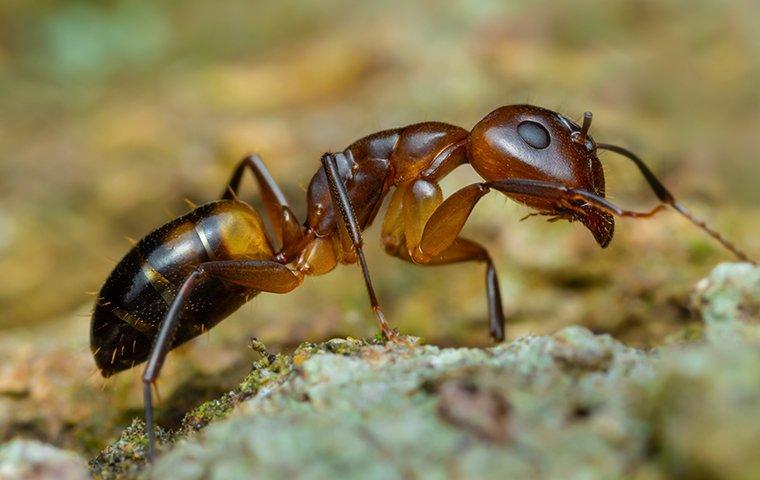
The Argentine ant (Linepithema humile) is an invasive species that is native to countries in South America that include the Parana River basin (Argentina, Brazil, Uruguay, and Paraguay). This species of ant can now be found on every continent except Antarctica. They have successfully traveled around the globe and that is not too surprising. What astounds people is that the Argentine ant will accept an individual as family even if they were born on the other side of the planet. Most other species of ants choose to fight each other. Why does this happen, how are they affecting the places that they invade, and how would ants that grew up on opposite sides of the globe recognize eachother as family?
I would like to start by asking you to think of an animal or insect in your local environment that seems to be over-populated. Have you seen a large flock of birds all flying together or swarming a tree? These are invasive starlings. Have you seen stink bugs in your home clustering in the corners? These are the invasive brown marmorated stink bug. Invasives become a problem when they cause environmental, ecological, or economic damage. The Argentine ant causes all three.
Where are they from?
Argentine ants are native to a location that frequently floods and becomes disturbed naturally by environmental conditions. This population over time adapted in a way that if one colony looses their home, they pick up and move to another colony in the same species where they are accepted. When there are multiple queens and multiple colonies all working together in a non-aggressive way we say those ants are “unicolonial” and they form one large “supercolony“. From an adaptation/natural selection view point, this makes sense. If a species is fighting with itself less, then they will reproduce faster and this benefits the species as a whole. In their native range, the supercolonies measure tens to hundreds of meters in diameter and they are still aggressive with individuals that are outside of their supercolony. This is not exactly what we see as they travel around the globe. Their ability to spread and work together in such large numbers allows them to reproduce quickly, take over large areas of land, and displace all of the native ants as they travel from country to country.
How are they affecting their environment?
The Argentine ant is from regions that are frequently disturbed and therefore prefer disturbed environments. What does a disturbed environment look like? When we knock down natural areas to create agricultural plots, these ants can move in and protect the aphids, scales, and other pests that are feeding on the crops. When the pests are protected, the plants suffer the consequences causing damage to the fruits or even death of the plants. When we knock down forests and dig into the ground to build structures like homes and businesses, they will invade those structures. Many times, they are looking for a water source but can be a real problem for homeowners. They have an impact on the native populations of ants as they will aggressively fight and take over any area they would like. As their numbers grow and colony sizes expand, they are a more formidable foe for native species of ants with significantly smaller colonies.
How do they recognize eachother?
The question that arises is HOW do these ants recognize eachother. What communication method or signals are they picking up to allow them to say, “You are one of us” vs. “You are an enemy to scare away or fight”? Ants have unique chemicals on their exoskeleton called “cuticular hydrocarbons” that are changed by not only their genetics but also their environment. Ants can read these chemicals and know they are made of the same thing or they are made of something different. In this way, an individual ant will know if you are part of their colony or not. When ants clean eachother, they are also sharing the chemicals on their exoskeleton. This is how all ants in the colony will have the same variety of chemicals that they have picked up from their environment.
Scientists believe these cuticular hydrocarbons are the key to understanding unicolonial ants. How much does the environment change these chemicals rather than being passed down genetically through the population? It depends on the species. For the Argentine ant, the environment is LESS likely of a factor than genetics. This is what allows these ants to recognize individuals across continents and soil types. There is also a distinct LACK of gene flow in the largest supercolonies of the Argentine ant. This means that after many generations, the genetics of these ants stay strikingly similar. Scientists do not know how this happens… yet. In other species, like the invasive garden ant (Lasius neglectus), the soil and other environmental factors can play a heavy roll in the change of their cuticular hydrocarbons. This makes the ants more likely to be aggressive to individuals of the same species because the chemicals on their exoskeleton are different or unrecognizable.
Where are they now?
We know that when multiple queens and colonies of Argentine ants are all working together in the same area, we call them a supercolony. There is a supercolony of Argentine ants that spans over 900km (560 mi) of the coast of California. We will call this the North American colony. There is a supercolony of Argentine ants in Japan that is said to encompass approximately 670 acres. The largest supercolony found to date runs along the coasts of Italy, France, Spain, and Portugal approximately 6000km (3700 mi) of coastline. The sizes of these supercolonies are strikingly larger than the average supercolony in the native range. Yet, there are also smaller supercolonies dispersed across the globe. For instance, there is a smaller supercolony that is interspersed within the European supercolony, annotated by the white circles in the photo, that will not accept the larger supercolony. There is still much research to be done on the interactions between ants from these different continents. Scientists transported Argentine ants from the North American and European supercolonies to be introduced to individuals from the Japanese supercolony in a laboratory. They were all non-aggressive towards eachother! When you have multiple supercolonies that will all accept eachother and work together, this is what scientists have termed a megacolony! The three largest supercolonies of Argentine ants seem to be from the same introduction and spread from there, meaning that they are possibly all related to one another.
When and where was the original introduction?
Genetics suggest that the original introduction was from South America to the Portuguese sovereign state of Madeira somewhere in the 1847-1858 time frame. They traveled in the soil of traded goods and successfully made it to Portugal where they spread across the Mediterranean coast of Europe. They continued to spread in traded goods to California and Japan all without forgetting their roots. This ant megacolony has had minimal to no change in their cuticular hydrocarbons for over 150 years! This allows them to still recognize eachother when they are from opposite sides of the planet. We still do not know how their genetics stay so stable. The ability to interact with eachother on a global scale would not seem to help the stability or growth of the population evolutionarily or help the survival of the individual colonies. Will these ants break free from the ties that bind and differentiate themselves over time? We are still looking for answers. For now, I think that it is awesome that there is another societal species on the planet that has crossed the globe and arguably parallels the size of the human population.
read more at theinsectopia.com