 The Starset Society
by: Ambur Masen
“…I know the view up here is nice, but you only get one shot at orientation for
this job. If you fuck up, you will get sent back down, and you will get black-listed from
this company.”
Admittedly, Riley only heard the last bit of what Kathryn, her new boss, was going
on about, but how could she pay attention to the dry intricacies of interplanetary
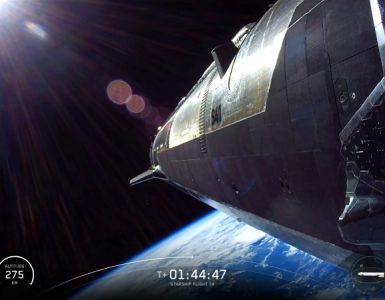
shipping regulations when she was witnessing her home planet from orbit for the first
time?
Today was the first day of Riley’s new job working for Prime Exports, the leading
name in interplanetary freight logistics these days. PE owns the majority of cargo-
hauling climbers that are authorized to transport commercial goods between Earth and
Dock 005, the premier shipyard currently in orbit, and as such, they were on a hiring
spree. Originally, PE mainly handled the transport of research materials, but as the
colonies in nearby star systems grew more populous, the demand for supplies became
too high to ignore—and PE, with all their resources, made sure to capitalize on it as
early as possible.
The walls of the primary PE warehouse on Dock 005 were mostly opaque and
made from special materials as to protect the goods from radiation while they sat
between shipments, but occasionally, there were transparent sections along walkways
that allowed workers to indulge their eyes as they moved between departments. Only a
select few specialized employees had access to the loading docks outside the
warehouse and got to experience space first-hand.
In the moment, Riley forgot to be jealous of the select few. All she could think
about was how the view of Earth from up here was like an exquisite painting: awe-
inspiring. A mere glimpse of what was the most gorgeous blue that she had ever seen
was enough to stop Riley right in her tracks, even though she was under strict orders to
be Kathryn’s shadow for the entirety of this trial period.
When she noticed the familiar jagged edges of the Americas peeking out from
under the wild swirls of thick white clouds, for a moment, Riley contemplated the
possibility of shoveling snow when she gets home from work that night—after all, it was
still February back home in Massachusetts, even if she was currently standing in a
comfortably climate-controlled vestibule 22,000 miles above the ground that she was
worried about slipping on.
It then dawned on her for the first time that it might actually be more like Spring
by the time she gets home from what was originally her ‘first day’ of work. If everything
goes according to plan, she would be here for the next few weeks, assisting Kathryn
with logistics matters until she felt that Riley would be ready to do the work by herself.
Then, she’d be allowed a short break of a few days back home on the surface before
being formally added to PE’s rotations.
Not being home for that long was an unsettling thought, sure, but it was quickly
replaced by an even worse one, thanks to Kathryn’s interjection: the verbalized
possibility of never seeing such beauty again was so distressing that it immediately
freed Riley from her captivated trance in front of the window.
As she turned to face Kathryn, Riley had expected the senior logistics manager
to appear annoyed with her, but instead, she found a wisp of empathy in her
companion’s weathered face.
“Believe it or not, after working here a while, you do get used to it.”
Riley gestured to the window with a thumb. “I don’t think I could ever get used to
that.” She was heavily tempted to take one last gluttonous glance, but she knew that
any amount of slacking was not tolerated at PE, and she really did need—and
want—this job.
Kathryn encouraged Riley to vacate the viewing platform with a silent wave of the
hand, and the girl reluctantly obeyed. Once they were en route to their destination, she
got back to business.
“Everything about this freight system is perfectly timed; there are many
concurrent shipments happening each day, with climbers going in both directions.
Delays can be disastrous in more than one sense of the word, so it’s very important that
we get to the exchange platform on time—” Kathryn waited until they both rounded the
corner to ask her question. “And remind me, Riley, what is considered ‘on time’ here at
Prime Exports?”
Riley resisted the urge to roll her eyes as she answered for what felt like the
hundredth time: “Fifteen minutes early.”
“Good. Now, you’ve been assigned to…” Kathryn swiped at the screen of the
tablet she had been holding to wake it up. “The ag team—that’s ‘ag’ as in ‘agriculture’.
Do you know what that means?”
“Yeah, that has to do with farming, right?”
“Precisely. And the ag team is actually one of the largest that PE has. There’s a
huge need for ag shipments, and in both directions, too. Any guesses as to what we’ve
been transporting through here?”
“Food for the colonies?” Riley tried to remember some of what the on boarding
videos she sat through said about the various operations teams, but after the three hour
mark, she stopped absorbing much.
“Yes, sometimes.” Kathryn led them down another hallway and they passed a
sign indicating that they were entering Ag Receiving. “What else?”
Riley took a guess that went against her instincts: “Uh… like crops, but from
space?”
“Well… yes.” An amused smile pulled at Kathryn’s mouth as she registered
Riley’s apparent surprise. “It’s still mostly small shipments for research purposes, not
massive imports. Not yet anyway. But maybe someday, farming out in the colonies will
become more viable than it is on Earth, and we’ll all be drinking coffee that was grown
out in the Ophiuchus region, or something—oh good, we’re here, and nearly on time!”
The pair abruptly stopped in front of a short hall labeled 15. At the end of the hall
was a door. The light above it glowed green, which Riley remembered meant that a
shipment had arrived and was ready to be checked in. Once they were close enough,
the door opened automatically, revealing a large room with protective gear in various
sizes hanging from the walls, and a man who was rising from his seat at a table near
the exit on the far end.
“Carlos!” Kathyrn greeted him as she crossed the room. “What do you have for
us this time?”
“Pumpkins, Kath. I’ve got a ship full of pumpkins,” Carlos said, offering his tablet
for a signature. “And not a single one of ‘em is orange!”
“How about that,” Kathryn replied without a hint of surprise in her voice.
“Heard they made a nice pie for some scientists celebrating some kind of
Thanksgiving out there, though.”
Kathryn tapped through a few screens, providing a squiggle of her finger as
necessary to satisfy the signature fields. Before returning the tablet, she assigned his
return-trip shipment: boxes of the next generation of irradiated pumpkin seeds. “Maybe
these will end up the right color.”
Mutation Breeding: A Genetic Approach to Creating New Plant
Varieties
The basis of many modern plant breeding practices can be traced back to the
1800s, when the “father of genetics”, Gregor Mendel, established the three ‘laws of
inheritance’ through his experiments with pea plants. Mendel’s laws of inheritance
conceptualize how genetic traits are passed from ’parent’ to ‘child‘, and so on.
Over the course of thousands of grow cycles, Mendel tracked which varieties of
pea plants he was crossbreeding together. He took note of the specific traits that
differed between the varieties, like seed color, pod shape, and flower color. As the new
generation of peas grew, Mendel took notes on the traits found in the pea offspring, and
which parent plant they belonged to. He would then crossbreed samples from the new
generation of peas together and compare the three results. During this experiment, he
found some very specific patterns in how the genetic traits were distributed across
generations.
For example, Mendel noticed that if a pea plant which had yellow seeds was
crossed with a pea plant that had green seeds, the resulting offspring would all have
yellow seeds; none would have green seeds. Then, he noticed that if he crossed two of
those yellow-seeded pea offspring together, the resulting third generation of pea plants
would have a mix of yellow and green seeds—even though their parents only had
yellow seeds. In about 25% of his samples, the “hidden”, or recessive, gene always
came back in the third generation of plants.
Understanding how certain genetic traits appear across generations is key to
developing new plant varieties—especially varieties that may inherit desirable traits, like
being drought- or disease-resistant, from their parents.
Mendel’s Three Laws
In short, Mendel’s three laws of inheritance are as follows:
1) The Law of Dominance and Uniformity: some alleles (gene variations) are
considered dominant and others are considered recessive. If an organism
possesses both a dominant and recessive allele for a particular genetic trait,
the dominant trait will be expressed over the recessive one.
2) The Law of Segregation: during gamete (reproductive cell) formation, the
alleles for each gene segregate from each other so that each gamete carries
only one allele for each gene. In other words, organisms possess two alleles
for each trait, which may or may not be different from one another, and they
will only pass on one of them to their children.
3) The Law of Independent Assortment: as DNA is being written, the biological
selection of an allele for each genetic trait occurs independently of the others.
For example, in peas, the selection of an allele for seed color has no impact
on the selection of an allele for pod shape, and so forth.
There are exceptions to these rules, as we’ve since discovered. For example,
some genes are considered complex, and their expression is determined by a variety of
factors, not just “dominant” vs “recessive”; sometimes, a parent can pass on two copies
of a gene to their child, who would then possess three copies instead of two (as in
‘down syndrome’, or Trisomy 21). It’s also possible for multiple genes to be inherited
together (rather than strictly independently), which is referred to by geneticists as
‘linkage’. However, although they may be considered basic by today’s standards,
Mendel’s laws are still the foundation for our current, deeper understanding of genetics,
and all of the related work we’ve done since.
Mutagenesis and Mutation Breeding Explained
Sometimes, when DNA is being written, ‘mistakes’ are made, and new traits not
seen in either parent are expressed by the offspring. These ‘mistakes’ are known as
mutations, and they are the result of a phenomenon called ‘mutagenesis’.
Mutagenesis is a way for organisms to evolve to survive harsh conditions. Yet,
mutagenesis occurs in nature on a random, and infrequent, basis. It can take some
organisms thousands of years to develop a beneficial, inheritable mutation, even if at
risk of otherwise going extinct—and even then, there’s no guarantees of it happening.
When it comes to making scientific advancements in agriculture, this natural
mutation timeline isn’t exactly conducive to solving the problems that contribute to
global food insecurity, like drought and disease. However, an answer to this timing issue
may lie in a technique called mutation breeding, and it’s already been shown to be
successful.
Mutation breeding (also known as ‘variation breeding’) is a process in which
scientists use chemical or physical means to induce spontaneous genetic mutation in
plants. The goal of mutation breeding is to accelerate the rate at which these random
mutations occur in order to develop new crop varieties and increase the diversity of crop
DNA. At the start of the plant breeding process, genetic variations (mutations) are
induced to quickly develop a large sample of potentially improved crops. Sometimes,
the resulting mutations are eliminated by the plant’s cellular repair mechanisms, but
other times, a heritable mutation is conceived. The plants with the most promising
beneficial mutations will then be selected for further breeding.
When successful, mutation breeding gets us closer to solutions to problems like
Earth-based crop failure by creating hardier crops, and eventually, it may even lead us to figuring out how to successfully accomplish things like colonial sustenance farming
on another planet.
Irradiation
One common mutation breeding method is to expose plants to ionizing radiation
in order to induce mutagenesis. Most commonly, this involves irradiating seeds
specifically, but some experiments may involve whole plants, seedings, or sometimes
just one part of the plant, like its pollen, or its stem.
Irradiation techniques have shown promise in producing plant varieties that have
improved qualities like higher yields, shorter grow times, and stronger resistance to the
effects of climate change, pests, and/or disease. The offspring of irradiated plants are
not radioactive, and can continue to be safely bred for many generations in order to
achieve the best possible traits without fear of harm.
Radiation-based variation breeding techniques can be sorted into three main
categories: classical radiation mutation breeding (which mainly involves the use of x-
rays or gamma rays to induce mutagenesis), particle mutation breeding (which mainly
uses accelerated particles like protons to induce mutagenesis), and space mutation
breeding (which involves sending seeds to orbit for a period of time and exposing them
to cosmic rays and other background radiation in the universe in order to induce
mutagenesis; then, the seeds are brought back down to Earth to be grown, studied, and
further bred).
While classical radiation is still the most popular method, space mutation
breeding is characterized by a much higher frequency of induced mutations than with
classical radiation breeding techniques. As such, space mutation breeding may become
more popular as more manned space missions are planned and executed in the future.
In fact, crops like wheat, rice, and cotton have already gone to space.
Recent (Earth-Based) Success
A recent success story in mutation breeding is that of the disease-resistant
cauliflower that was created by scientists in the island nation of Mauritius.
Black rot disease is a common problem that cauliflower farmers in Mauritius face;
it can wipe out entire harvests. To avoid disaster, farmers had to import expensive
hybrids from abroad or use environmentally harmful pesticides to deter the disease.
Since 2016, scientists at Mauritius’s Food and Agriculture Research and
Extension Institute (FAREI) have been using irradiation (gamma rays specifically) to
develop a new variety of cauliflower that has greater resistance to black rot disease
while also retaining the nutritional value of the traditional local variety that farmers were
used to growing. FAREI developed a promising mutant, and in late 2025, their top-
performing “Local Cream” variety of seeds were distributed to farmers to grow
themselves.
Rita Nowbiuth, the principal research scientist at FAREI, shared: “This new
variety promises to help Mauritian farmers reduce their reliance on chemical pesticides,
lower their production costs, and ensure a stable supply of cauliflower”.
Now, scientists at FAREI are continuing to work on developing new plant
varieties, with cabbage and carrots reportedly among the next candidates.
Read more about this project via IAEA.