 The Starset Society
By: Rhodilee Jean Dolor
As the National Aeronautics and Space Administration (NASA) and the European Space Agency (ESA) embark on space missions to find signs of life beyond our planet, a new study suggests the possibility that life on Earth may have extraterrestrial origins.
Researchers from Johns Hopkins University said that hardy life forms tucked in fragments from asteroid hits may be able to withstand the extreme force of the impact and survive hostile interplanetary journey.
The Lithopanspermia Hypothesis
Evidence of asteroid hits is common. Most bodies in the solar system are pockmarked by impact craters, suggesting collisions. When an asteroid impact happens, the powerful event can catapult rocks and debris at high speeds into space and planets, including the Earth.
Because asteroid strikes eject materials and hurl them across space, scientists have long wondered whether or not life forms from other planets could also be launched from these events. A theory known as the lithopanspermia hypothesis posits that life forms inside the ejected debris can land on another planet.
“Life might actually survive being ejected from one planet and moving to another,” said study author K.T. Ramesh, Alonzo G. Decker Jr. Professor of Science and Engineering at Johns Hopkins University and one of the world’s leading authorities on impact mechanics and materials subjected to extreme conditions.
“This is a really big deal that changes the way you think about the question of how life begins and how life began on Earth.”
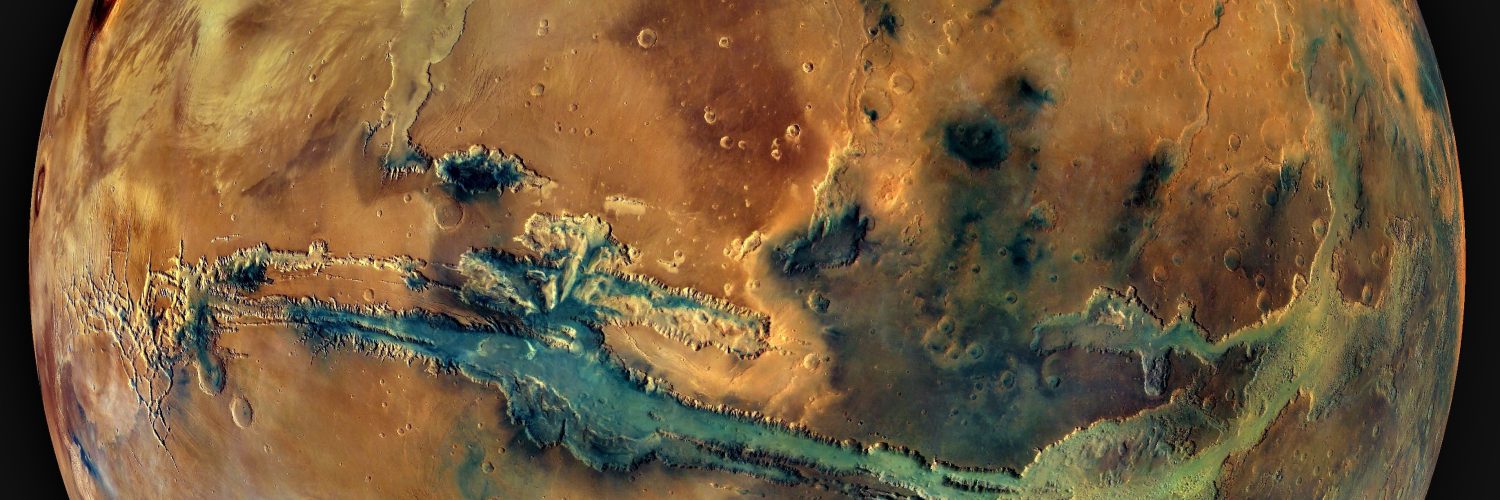
Of particular interest in the theory is Mars. Scientists say that the number of Martian meteorites that have been found on Earth suggests that lithopanspermia may be possible.
The Red Planet
Mars may have harbored life in the past.
Last year, NASA said that a sample collected by the Perseverance Mars rover from an ancient dry riverbed in the Jezero Crater could preserve evidence of ancient life on the planet.
“[This finding] is the closest we have ever come to discovering life on Mars. The identification of a potential biosignature on the Red Planet is a groundbreaking discovery, and one that will advance our understanding of Mars,” said acting NASA Administrator Sean Duffy.
Interestingly, Mars is one of the most cratered celestial bodies and more than 100 meteorites originating from the Red Planet have already been found here. These rocks were blasted off from Mars following an impact and eventually crashed on Earth.
Deinococcus Radiodurans
Previous studies conducted to test the lithopanspermia theory have been inconclusive. The experiments targeted organisms found on Earth instead of life forms that would suit the environments of other planets.
For their study published in the journal PNAS Nexus on March 3, Ramesh and colleagues decided to use Deinococcus radiodurans, one of the most radiation-resistant organisms known, to find out how microorganisms would handle the stress of a planetary ejection.
The bacterium, which can be found in the high deserts of Chile, has a thick shell and an ability to self-repair. It can also survive inhospitable and space-like conditions, including extreme cold, vacuum and intense radiation.
“We do not yet know if there is life on Mars, but if there is, it is likely to have similar abilities,” Ramesh said.
Extreme Pressure
The researchers simulated the pressure of an asteroid strike and ejection from Mars by sandwiching D. radiodurans between metal plates and then hitting the plates with a projectile from a gas gun at speeds of 300 mph.
The experiment generated 1 to 3 Gigapascals (GPa) of pressure. For comparison, the pressure at the bottom of the Mariana Trench, the deepest known part of the world’s oceans, is a tenth of a GPa.
The researchers said that they expected the organism to be dead at the first pressure but D. radiodurans proved really hard to kill. The bacteria used in the experiments survived nearly every test at 1.4 GPa albeit the survival ratio dropped to 90% at about 1.9 GPa and 60% at 2.4 GPa.
D. radiodurans did not show signs of cellular damage after the lower pressure hits but the organism sustained ruptured membranes and internal damage after the higher pressure experiments.
“We demonstrated that the extremophile D. radiodurans has remarkably high survivability and viability after being subjected to pressures of up to 3 GPa. As the pressure increases, D. radiodurans exhibited indicators of increased biological stress, as determined by the transcriptional analysis of impacted samples.,” Ramesh and his colleagues wrote in their study.
The researchers said that the direct impact experiments show that D. radiodurans is capable of surviving extreme pressures associated with impact-induced ejection from planet Mars.
“Earlier work has demonstrated that D. radiodurans can survive the radiation, cold, and desiccation associated with interplanetary transport. Thus, it is possible for such life to be transported between planets in the Solar System as a result of major asteroid impacts,” the researchers wrote.
Planetary Protection
Aside from supporting the feasibility of the lithopanspermia theory, the study’s finding that life can spread between planetary bodies also underscores the significance of the planetary protection policy embodied in the Outer Space Treaty of 1967.
The policy aims to prevent Earth-born organisms from contaminating other worlds during space missions and ensures that the returning spacecraft and samples do not bring foreign organisms.
Scientists say that planetary protection enables scientific space exploration while protecting the Earth at the same time.
“As we continue to explore our solar system by landing machines and humans on other planets, we need to ascertain that we do not bring potentially dangerous material home to Earth or carry anything from Earth that may contaminate another planetary body and prevent scientific investigations,” Athena Coustenis, the Director of Research at the French National Research Center (CNRS) and colleagues wrote in a paper published in Acta Astronautica in 2023.
Ramesh and his colleagues published the result of their study as NASA eyes conducting long-duration missions to the moon and eventually sending humans to planet Mars.
The US space agency recently launched Artemis II. The lunar flyby mission serves as a test flight for subsequent Artemis missions that aim to once again bring humans to the surface of the moon.