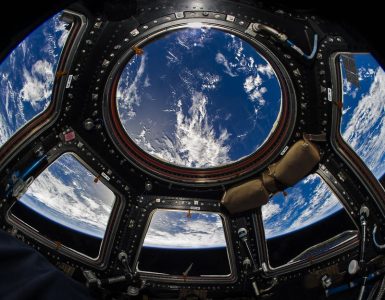

 The Starset Society
By: Athalia Norman
The ceremony was scheduled to begin in exactly seventeen minutes when Elias Mercer collapsed against the ornate marble pillar in the preparation chamber, clutching his chest.
“I can’t—” he gasped, his face contorting. “Something’s wrong.”
His best man, Dr. Kaito Chen, was at his side instantly, medical instincts overriding his duties as the keeper of the rings. “Elias! What are you feeling?”
“Chest… tight. Can’t breathe right. Stomach churning.” Elias’s knees buckled completely, and Kaito guided him to the floor. Sweat was soaking into the collar of his formal attire—a traditional suit with embedded temperature regulators. Regulators that were clearly failing to compensate for his sudden physiological distress.
“Heart attack?” whispered Tanvi, Elias’s cousin, her ceremonial sash glimmering with soft bioluminescence in the dimly lit room.
“Or appendicitis,” offered another groomsman, helpfully unhelpful.
Kaito pressed two fingers against Elias’s wrist, frowning at the rapid pulse. “I need a diagnostic, now. Anyone carrying?”
In any other wedding party, this might have been an absurd question. But among Elias’s friends—mostly fellow researchers from the Ganymede Medical Institute—it was a reasonable request.
Three guests immediately reached into formal pockets and clutches. Tanvi was fastest, pulling out what looked like an elegant silver bracelet. She snapped it open with practiced ease, revealing the medical-grade NeuraScan interface inside.
“Here,” she said, handing it to Kaito. “Latest prototype. Full cardiopulmonary and neurological mapping.”
Kaito slipped the device onto Elias’s wrist. The bracelet conformed instantly to his skin, tiny nanoprobes extending painlessly to establish a connection with his nervous system.
“Running diagnostic,” Kaito announced, his eyes tracking the holographic readout that shimmered above the device. “Heart rate elevated, 142 BPM. Blood pressure 160 over 95. Cortisol levels spiking. Stomach acid production increased three-fold.”
Another guest—Dr. Imam, the neuroendocrinologist who had delivered the toast at the rehearsal dinner—stepped forward, producing what appeared to be an ordinary pair of glasses from an inner pocket.
“May I?” she asked, and at Kaito’s nod, she slipped the glasses onto her face and knelt beside Elias. Her eyes flickered with reflected data as the augmented reality display overlaid his physiological state with predictive models.
“Interesting,” she murmured. “His amygdala is firing at maximum capacity. The hypothalamic-pituitary-adrenal axis is in overdrive.”
“In English, please,” groaned Elias, still clutching his chest.
“You’re having a panic attack, my friend,” Dr. Imam said with a small smile. “A rather spectacular one, I might add.”
Kaito studied the data streams and nodded. “She’s right. There’s no myocardial infarction pattern. No signs of gastrointestinal rupture or inflammation. This is a classic fight-or-flight response.”
Elias blinked rapidly, confusion momentarily overriding his distress. “But I’m not afraid. I want to marry Sophia. I’ve never been more certain of anything.”
The preparation room door slid open with a soft hiss, and a striking woman in a midnight-blue dress entered, carrying what looked like an antique doctor’s bag. Dr. Helen Mercer—Elias’s mother and the foremost neuropsychiatrist on Earth—surveyed the scene with clinical detachment.
“I suspected as much,” she said, kneeling beside her son. From her bag, she extracted a small silver sphere, which she placed gently on Elias’s forehead. It adhered there, pulsing with soft blue light.
“Neural harmonizer,” she explained to the room. “It won’t sedate him—we don’t want a groom who can’t remember his own wedding—but it will regulate the autonomic nervous system response.”
Within moments, Elias’s breathing began to slow. The readouts on the various diagnostic devices showed normalizing patterns across all systems.
“Better?” Helen asked, helping her son to his feet.
Elias nodded, color returning to his face. “But I still don’t understand. I’m not nervous about marrying Sophia.”
His mother smiled, a rare softening of her usually serious demeanor. “The conscious mind and the autonomic nervous system don’t always communicate clearly. Your body was reacting to the importance of this moment, not to any doubt about Sophia.”
“Like a physiological standing ovation,” offered Tanvi, retrieving her diagnostic bracelet. “Your body was just making sure you understood the significance of what you’re doing.”
Elias straightened his formal wear, the embedded circuitry recalibrating to his now-normal body temperature. “Well that was nice of it and all, but next time could it just shoot my watch an affirmation or mindfulness reminder instead?”
The room filled with laughter, breaking the tension.
“Five minutes to ceremony,” announced the venue’s AI through hidden speakers.
As the wedding party filled the ebony tiled ballroom, their outfits as evocative as moonjellies in midnight surf,, Dr. Helen Mercer held back her son for a moment.
“The harmonizer will disengage after the ceremony,” she said, gently adjusting his collar. “Some moments should be felt fully, neural spikes and all.”
Elias nodded, touching the barely perceptive device at his temple. “Thank you.”
“Consider it my wedding gift,” Helen replied. “Besides, your father had the same reaction when we got married. Some traditions transcend even our best medical technology.”
Together, they walked toward the ceremony chamber, where Sophia waited—probably with her own collection of diagnostic tools hidden among her wedding ensemble, monitoring her own magnificent neurochemical waves of emotion.
The Present
The situation above, with medical professionals and accessible, easy to use, diagnostic devices is not as far into the future as you might imagine. Right now, there are affordable, FDA cleared, credit card sized ECG machines, diagnostic AR glasses, and handheld ultrasounds available to the public. For a price.
Electrocardiograms
KardiaMobile® Card(later referred to as just Kardia) by AliveCor was released in 2011. The little white credit card looking device is the world’s first personal electrocardiogram (ECG) machine. Slim enough to fit in any wallet and built to resist everyday wear and tear, users can receive a real time ECG just by pressing their fingers onto the card’s two chip receptors. Readings are then transmitted to an app via Bluetooth and can be shared with caregivers, physicians, and the AliveCor team.
“The availability of a personal ECG that fits in a wallet will change the face of remote cardiac monitoring for patients and healthcare professionals alike,” said Darria Long Gillespie, MD, emergency physician and Clinical Assistant Professor of Emergency Medicine, AliveCor Ambassador and founder of the TrueveLab. “As someone who lives with ventricular tachycardia and has treated patients with arrhythmias, I know how critical it is to access accurate ECG recordings in real time. KardiaMobile Card has made this technology even easier to access, and it has quickly become the most valuable card in my wallet.” As of April 2025, KardiaMobile® Card costs about $99 USD and is taking measures to increase accessibility.
Augmented Reality (AR) Glasses
On that note, diagnostic Augmented Reality (AR) glasses are also just around the corner. Used for years in training medical students on procedures like implants and grafts, John Hopkins has begun taking strides towards regular use of AR in surgery on living patients. On June 8, 2020 physicians wore a headset that projected images of a patient’s bones, organs, and tissues based on CT scans while they placed six screws into said patient’s spine for spinal fusion surgery. “Essentially giving surgeons x-ray vision.” Two days later, this same “x-ray” vision was used to remove a rare form of tumor, a chordoma, from the spine of another patient. Both patients are reported to be doing well.
The technology John Hopkins used for these surgeries is by Augmedics, a surgical and medical development company based in Illinois. As of 2023, Augmedics has treated a record-breaking 5,000 spine patients with its AR surgery solutions. “The record-setting 5,000th case was performed by Dr. Andrew Sama, Co-Chief of Spine and Associate Attending Orthopedic Surgeon at the Hospital for Special Surgery in New York, New York. HSS, the #1 ranked hospital in the US for orthopedics a record 14 years running, began using Augmedics in 2022, becoming the first in New York State to utilize AR navigation for spine surgery.”
Portable Ultrasounds
With headquarters in Istanbul and New Jersey, Prof. Ilker Hacihaliloglu and Soner Hacıhaliloğlu of PONS Tech innovated a portable ultrasound pod device. Easy to slide into a purse or pocket, the handheld ultrasound device takes quick ultrasounds that can then be transmitted to a primary caregiver. The device was brainstormed when the cofounders lost their father in 2012 due to a late diagnosis. Therefore, PONS Tech’s mission is to make medical imaging accessible. Especially in communities where a trip to the hospital or a doctor might involve a day off work and a multiple hour journey. Per their About Us, “Today, we understand that we need to democratize and decentralize the medical imaging ecosystem in healthcare. Value based outpatient care should be done anytime, anywhere, and be accessible by everyone to prevent overcrowding hospitals and save time.
The PONS mobile ultrasound system is the first comprehensive solution for risk assessment on health conditions outside the hospital settings, with the help of artificial intelligence and deep learning technology.”
Wearable Breathalyzer
Headquarted in Raleigh, North Carolina, GreySun Technologies’ CEO, Cade Spector, invented the world’s first wearable breathalyzer. A fresh Duke University grad, Cade was moved to invent the breathalyzer and to gamify it with a companion app, after losing his brother, Grey, to a substance abuse related mental health disorder. The device works by having users input a blood alcohol percentage limit of their choice before they start drinking. If the blood alcohol percentage number exceeds the input percentage, the user’s loved ones are sent a message to make sure they reach out and help schedule a ride, be the designated driver, etc. “So much of our drinking and learning our limits is left to trial and error.” Spector said at the April 2025 meeting of Big Ideas Raleigh. “By using GreyBand I learned what my healthy limits are and I use it with my friends to kind of gamify it. It’s fun to see which of my friends are drinking and where.” And, to drink responsibly and safely. When asked if the gamification would encourage drinking, Spector likened it to the condoms in Duke University’s, Blue Box. The Blue Box, a box of wellness freebies for incoming freshman, contains and is not limited to: sleep masks, ear plugs, tea, bandaids, sanitizer, coloring books, a card with campus resources, and a condom and lubricant. “It doesn’t mean we’re encouraging you to have sex,” Spector explained. “It means we know you might and so you might as well, safely.” Spector is in the process of including GreyBand in future Blue Box kits.
The Future
The medical technologies highlighted in this article—from pocket-sized ECG monitors to AR surgical guidance, portable ultrasound devices, and wearable breathalyzers—represent more than just technological advancement. They embody a fundamental shift in healthcare: from centralized, reactive treatment to distributed, preventative care.
While our opening story of Elias’s wedding may seem like science fiction, the foundations for seamless diagnostic integration already exist. As seen with KardiaMobile’s ECG card, Augmedics’ AR surgical glasses, and PONS Tech’s portable ultrasound, we already have early harbingers of a world where medical diagnostics become as commonplace and accessible as smartphones.
This democratization of medical technology carries profound implications. Remote communities gain access to tools previously available only in well-equipped hospitals. Patients with chronic conditions can monitor their health in real time, sharing data instantly with healthcare providers. Early detection becomes the norm rather than the exception.
Yet, as Dr. Helen Mercer reminds us in the ending scene of the story, technology should enhance—not replace—the human experience. Some moments, like wedding jitters or the birth of a child, deserve to be felt fully, “neural spikes and all.” The most powerful medical technologies will be those that expand human capability while preserving human connection.
As these technologies continue to evolve and become more accessible, the gap between science fiction and reality narrows with each innovation. The future of healthcare thus becomes something not just to imagine, but something we’re actively building today.
Sources:
Kardia Reviews: Is This EKG Worth It? | Health Insider
AliveCor | FDA Clears World’s First Credit-Card-Sized Personal ECG
Johns Hopkins Performs Its First Augmented Reality Surgeries in Patients | Johns Hopkins Medicine
Discussion with Cade Spector at Big Ideas Raleigh Movement, Athalia Norman April 10, 2025
Interview with Soner, Athalia Norman August 18, 2022