 The Starset Society
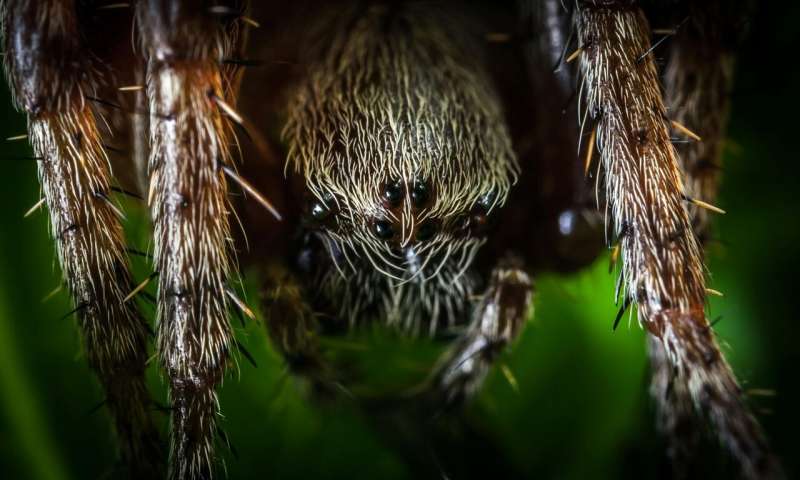
Members of the arachnid class—think spiders, scorpions and harvestmen (daddy long legs)—are often the targets of revulsion, disgust and fear. Yet, they are crucial for ecosystems to thrive. Given the crash in worldwide biodiversity, including what some call the “insect apocalypse,” a pair of ecologists at the University of Massachusetts Amherst decided to check in on the general state of insects and arachnids in the U.S.—only to discover massive gaps in the data.
Study reveals urgent data gaps
The research, published recently in PNAS, points to an urgent need to assess, protect and value insects and arachnids, a key pillar of planetary health.
“Insects and arachnids are fundamental for human society,” says Laura Figueroa, assistant professor of environmental conservation at UMass Amherst and the paper’s senior author. “They help with pollination and biological control of pests; they can serve as monitors of air and water quality, and they have worked their way deeply into many cultures throughout the world.” (think of Aragog in the Harry Potter book series, for example).
“Many people care about popular charismatic animals on the planet, like lions and pandas, which, justly, have received international conservation attention. Given that insects and arachnids don’t usually get the same attention, we wanted to know how they were doing,” adds Figueroa
Conservation blind spots across species
To assess the state of our creepier, crawlier neighbors, Figueroa and her graduate student, Wes Walsh, the paper’s lead author, gathered conservation assessments for the 99,312 known insect and arachnid species in North America, north of Mexico. What they discovered was astounding.
“Almost 90%—88.5% to be precise—of insect and arachnid species have no conservation status,” says Figueroa. “We simply have no idea how they are doing. Almost nothing is known about the conservation needs of most insects and arachnids in North America.”
What little data existed was biased toward aquatic species that are important for monitoring water quality (mayflies, stoneflies and caddisflies), while more charismatic insect groups, including butterflies and dragonflies, received a disproportionate share of conservation protections.
“Arachnids, in particular, are really missing from conservation; most states don’t even protect a single species. We need more data and protection for insects, but also arachnids,” says Walsh.
The team also discovered that the states relying most on extractive industries, such as mining, quarrying and oil and gas extraction, were less likely to protect either insects or arachnids, while states with more eco-centric public attitudes protected more species.
By way of comparison, Figueroa points to bird conservation, which has been far more successful in protecting and preserving species.
“The research shows that you get the best conservation efforts when broad, diverse coalitions come together,” she says. “In the case of birds, it was hunters, bird watchers, nonprofit organizations and many other constituencies who banded together to reach a common goal.”
“Insects and arachnids are more than objects of fear,” says Walsh, who sports a spider tattoo on his arm. “We need to appreciate them for their ecological importance, and that begins with collecting more data and considering them worthy of conservation.”
read more at phys.org